
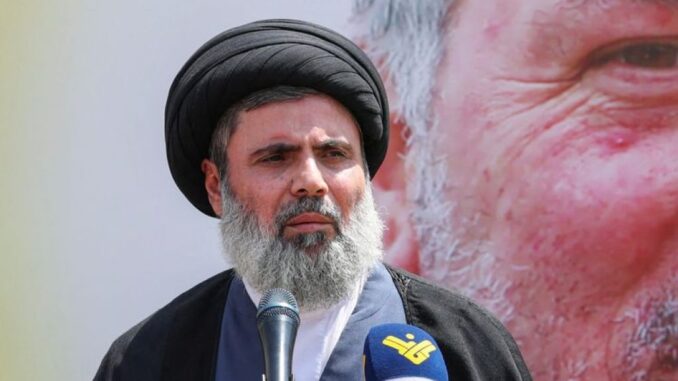
As speculation mounts about a potential leadership transition within Hezbollah, the name Hashem Safieddine has emerged as a prominent candidate to succeed the group’s long-standing leader, Hassan Nasrallah. This article delves into Safieddine’s background, his role within Hezbollah, and what a leadership change might signify for the organization and the broader geopolitical landscape.
Background of Hashem Safieddine
Born in 1965, Hashem Safieddine hails from a well-respected family in the Shiite community of Lebanon. He has been a key figure within Hezbollah since the organization’s inception in the early 1980s. Safieddine’s educational background includes studying religious sciences, which has equipped him with the ideological grounding that underpins Hezbollah’s operations.
- Early Involvement in Hezbollah: Safieddine joined Hezbollah in its formative years and quickly rose through the ranks. His early involvement in the organization was characterized by a focus on social and political activism, which has been pivotal to Hezbollah’s efforts to integrate itself into Lebanese society.
- Leadership Positions: Over the years, Safieddine has held several important roles within Hezbollah, including serving as the head of the group’s political council and overseeing its social services and welfare programs. His diverse responsibilities have provided him with a comprehensive understanding of both the organizational structure and the operational challenges facing Hezbollah.
Current Role and Influence
In recent years, Safieddine has been increasingly visible in Hezbollah’s political discourse. He has been involved in key negotiations and public statements concerning Lebanon’s political landscape, particularly regarding the group’s stance on regional conflicts and its relationship with Iran, which remains a crucial ally.
- Connections to Iran: Safieddine’s ties to Iran have strengthened over the years, particularly as Hezbollah has evolved into a significant player in Iranian regional strategy. His ability to navigate these complex relationships is seen as an asset for any future leadership role.
- Rhetoric and Public Presence: Known for his articulate and assertive style, Safieddine has been a prominent spokesperson for Hezbollah’s positions, particularly regarding its military and political strategies. His public speeches often emphasize resistance against Israel and support for Palestinian causes, resonating with Hezbollah’s core audience.
The Speculation Around Leadership Change
The speculation about Safieddine stepping into a leadership role comes in the context of ongoing discussions about the future of Hezbollah, especially as Hassan Nasrallah, who has led the organization since 1992, approaches an age where succession plans become increasingly relevant.
- Transition Dynamics: Any transition in leadership would require careful management to maintain the unity and operational effectiveness of Hezbollah. Safieddine is viewed as a candidate who could potentially carry forward Nasrallah’s legacy while also adapting to the changing political landscape in Lebanon and the wider Middle East.
- Impact on Hezbollah’s Strategies: If Safieddine were to become the leader, it would likely indicate a continuation of Hezbollah’s current strategies, including its resistance against Israel and its involvement in the Syrian conflict. However, his leadership could also bring a renewed focus on social issues within Lebanon, as Safieddine has extensive experience in that realm.
Geopolitical Implications
The potential ascension of Hashem Safieddine to the leadership of Hezbollah could have significant implications for regional politics. The group is already a major player in Lebanon and the broader Middle East, and a leadership change may shift the dynamics of its relationships with both allies and adversaries.
- Relations with Iran and Syria: Safieddine’s deep-rooted connections to Iran may reinforce Hezbollah’s alignment with Tehran’s regional agenda. His leadership could also impact Hezbollah’s collaboration with the Syrian regime, especially as both entities navigate the aftermath of the Syrian civil war.
- Impact on Lebanese Politics: As Lebanon faces ongoing economic and political crises, the new leadership could play a crucial role in determining Hezbollah’s approach to domestic issues, including its relations with other political factions and its role in governance.
Conclusion
Hashem Safieddine’s potential rise to leadership within Hezbollah reflects not only his long-standing commitment to the organization but also the complexities of navigating Lebanon’s political landscape. As the country grapples with various challenges, Safieddine’s leadership could usher in a new chapter for Hezbollah, one that continues to uphold its core principles while adapting to the evolving regional and domestic contexts. Whether he becomes the next chief or not, Safieddine’s influence on the group remains significant, and his actions will likely shape Hezbollah’s future in the coming years.