
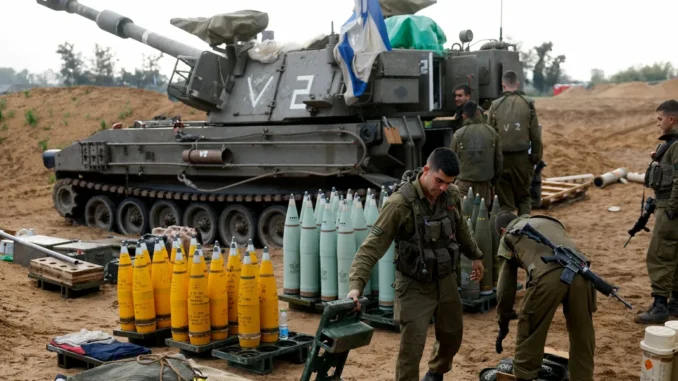
Israel’s military capabilities are among the most advanced in the world, a status bolstered by a complex network of arms suppliers and international partnerships. Understanding the sources of Israel’s weaponry is crucial for comprehending the nation’s defense strategies and geopolitical relationships. This article delves into the key suppliers of military equipment to Israel, highlighting the dynamics of these relationships.
1. United States
The United States is by far Israel’s largest arms supplier, providing the majority of the country’s military equipment and technology. The relationship is underscored by the following key aspects:
- Foreign Military Sales (FMS): Under the FMS program, the U.S. government sells military equipment to Israel, often at favorable terms. This includes advanced fighter jets, missile defense systems, and naval vessels.
- Military Aid: The U.S. provides significant military aid to Israel, which includes approximately $3.8 billion annually in military assistance. This funding enables Israel to purchase American-made military equipment, further solidifying the bilateral relationship.
- Joint Development Programs: The U.S. and Israel collaborate on various military projects, such as the Iron Dome missile defense system, which has become a critical component of Israel’s defense strategy.
2. European Union Countries
Several European nations also play a role in supplying Israel with military hardware:
- Germany: Germany is a key supplier of submarines to Israel, with the Dolphin-class submarines enhancing Israel’s naval capabilities. The two countries share a strong defense partnership, with Germany providing significant military assistance and funding for these submarines.
- France: Historically, France has been a supplier of military aircraft, weapons systems, and technology to Israel. Though the relationship has fluctuated over the years, France remains an important source of military equipment.
- United Kingdom: The UK has supplied various military technologies, including armored vehicles and surveillance systems. British defense companies continue to engage in contracts with Israeli firms.
3. Domestic Defense Industry
Israel has developed a robust domestic defense industry, producing a wide range of military equipment and technologies:
- Israel Aerospace Industries (IAI): IAI is a major player in developing military aircraft, missiles, and unmanned aerial vehicles (UAVs). Their innovations have significantly enhanced Israel’s military capabilities.
- Elbit Systems: This leading defense electronics company specializes in UAVs, cyber defense, and electronic warfare systems. Elbit has become a significant exporter, supplying various countries with advanced technologies.
- Rafael Advanced Defense Systems: Known for its missile systems, including the Iron Dome and Spike missiles, Rafael plays a critical role in Israel’s defense landscape.
4. Other Suppliers
In addition to the primary suppliers, several other nations and companies contribute to Israel’s military capabilities:
- Russia: Although relations have been complex, Russia has sold some military technologies to Israel, particularly during the Cold War. Today, Israel’s relationship with Russia remains cautious, especially regarding military engagement in Syria.
- China: Israel has engaged in technology transfers with China, providing advanced agricultural and surveillance technologies, although this relationship has raised concerns within the U.S. and other allied nations.
Conclusion
Israel’s military capabilities are supported by a multifaceted network of international suppliers and a thriving domestic defense industry. The United States remains the most significant supplier, underscoring a strategic partnership that spans decades. Meanwhile, collaborations with European nations and advancements within Israel’s own defense sector further enhance its military prowess. As geopolitical dynamics evolve, the landscape of military supply to Israel will continue to be influenced by international relationships and regional security concerns. Understanding these dynamics is essential for analyzing Israel’s defense strategy and its implications for the broader Middle East.