
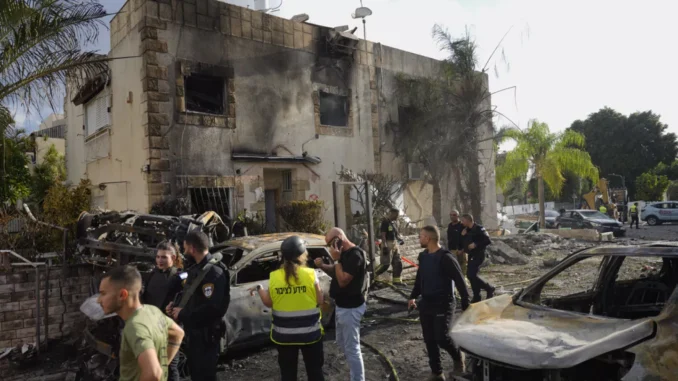
In a significant escalation of violence, a man was killed and at least nine others were wounded in a series of rocket barrages targeting northern Israel. This latest incident marks a troubling continuation of hostilities in the region, raising concerns about the security situation and the potential for further conflict.
The Incident: Timeline and Impact
The rocket attacks occurred late on a recent evening, with multiple projectiles fired from areas in southern Lebanon. According to Israeli defense sources, the rockets struck several towns and communities in northern Israel, causing widespread panic and damage to property. Emergency services were swiftly deployed to the affected areas, providing medical assistance to the injured and conducting damage assessments.
The deceased was identified as a local resident, highlighting the tragic consequences of the ongoing conflict for civilians living near the border. The wounded include a mix of men, women, and children, underscoring the indiscriminate nature of such attacks and the risks faced by ordinary citizens caught in the crossfire.
Response from Israeli Authorities
In the aftermath of the attacks, Israeli officials condemned the rocket fire and reiterated their commitment to defending the nation’s borders. Prime Minister Benjamin Netanyahu expressed condolences to the family of the deceased and emphasized the need for a robust response to ensure the safety of Israeli citizens.
The Israeli military has been put on high alert, and retaliatory strikes were conducted targeting launch sites identified in southern Lebanon. The military stressed that it would take all necessary measures to protect its citizens and deter future attacks.
In a statement, the Israel Defense Forces (IDF) declared, “We will not tolerate any aggression against our civilians, and we will respond with force to those who seek to harm us.” This firm stance reflects the ongoing tension along the Israel-Lebanon border, where sporadic violence has been a recurrent issue.
Context: Ongoing Tensions in the Region
The recent rocket barrages are part of a broader pattern of violence in the region, particularly between Israel and various militant groups based in Lebanon, including Hezbollah. The tensions have escalated in recent months, with increased exchanges of fire and provocations along the border.
Hezbollah, a powerful Shiite militant group, has been a significant player in the conflict with Israel, often utilizing its military capabilities to challenge Israeli forces. The group has expressed solidarity with Palestinian factions and has indicated its willingness to support them in their struggle against Israel. This alignment has led to fears of a wider conflict erupting, drawing in multiple actors across the region.
The situation is further complicated by the geopolitical landscape, with various regional and international players involved. The ongoing conflict in Syria, the Palestinian issue, and Iran’s influence in the region all contribute to the volatility of the situation.
Civilian Impact: Lives Disrupted
The impact of such rocket attacks extends beyond immediate casualties. For residents living in northern Israel, the threat of violence looms large, creating a climate of fear and uncertainty. Communities have been forced to adapt to life under the shadow of potential attacks, with many families taking shelter in fortified rooms during periods of heightened tensions.
Local businesses and schools also face disruptions as safety concerns lead to closures and cancellations of events. The psychological toll on residents, particularly children, is profound, with many experiencing anxiety and trauma as a result of living in a conflict zone.
Calls for De-escalation
In the wake of the latest violence, there have been renewed calls from various quarters for de-escalation and dialogue to address the underlying issues driving the conflict. Human rights organizations and peace advocates emphasize the need for a political solution that prioritizes the safety and well-being of civilians on both sides.
The cycle of retaliation and violence has historically led to devastating consequences for ordinary people, underscoring the urgency of finding a sustainable resolution to the conflict. Both Israeli and Palestinian leadership must engage in constructive dialogue to address the root causes of hostilities and work towards a peaceful coexistence.
Conclusion: A Urgent Need for Resolution
The recent rocket barrages that resulted in loss of life and numerous injuries highlight the precarious security situation in northern Israel. As tensions continue to simmer, the potential for further escalation remains a serious concern.
The international community must pay close attention to the developments in the region, advocating for restraint from all parties involved and supporting efforts toward a lasting peace. With civilian lives hanging in the balance, the urgency for dialogue and resolution has never been greater. Only through sustained diplomatic efforts can there be hope for a future free from the shadow of violence and fear.