
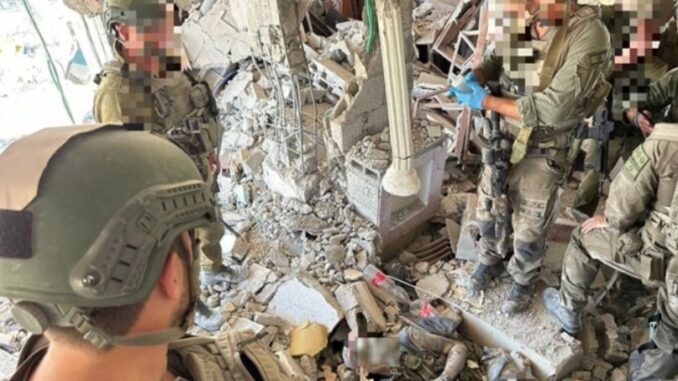
In a surprising and unprecedented gesture, the Palestine Liberation Organization (PLO), under the leadership of Mahmoud Abbas, has publicly mourned the death of Hamas chief Yehya Sinwar, referring to him as a “great national leader” and a “martyr.” Sinwar was killed in an Israeli airstrike during escalating conflicts in Gaza, prompting reactions from various political factions within the Palestinian territories.
A Shift in the Political Landscape
The PLO’s statement marks a notable shift in the complex dynamics between Fatah, the leading faction within the PLO, and Hamas, the militant group that governs the Gaza Strip. Historically, the two groups have been at odds, particularly since Hamas’s violent takeover of Gaza in 2007, which led to a bitter rivalry and ongoing tensions.
In its tribute, the PLO praised Sinwar’s leadership and contributions to the Palestinian cause, emphasizing his commitment to resistance and national unity. “His martyrdom represents a significant loss for our people and the struggle for our rights,” the statement read. This acknowledgment from the PLO is viewed as an effort to bridge the divide between the two factions at a time when Palestinian unity is more crucial than ever.
The Context of Sinwar’s Leadership
Yehya Sinwar became the leader of Hamas in Gaza in 2017 and was instrumental in shaping the group’s military strategies and political tactics. Known for his hardline stance against Israel, he played a pivotal role in various conflicts, including the recent escalation of violence that erupted in October 2023. Sinwar was seen as a key architect of Hamas’s military operations and was admired by many Palestinians for his unwavering commitment to resistance.
Sinwar’s leadership style was often characterized by his assertive approach to confronting Israeli policies and actions in Palestinian territories. Under his tenure, Hamas maintained its influence in Gaza, despite ongoing blockades and significant challenges. His death is likely to create a power vacuum within the organization, prompting discussions about succession and the future direction of Hamas.
Reactions from Across the Palestinian Spectrum
The PLO’s mourning of Sinwar has elicited mixed reactions among Palestinian factions and the broader public. Supporters of Hamas have hailed his legacy and commitment to the Palestinian struggle, viewing him as a symbol of resistance against Israeli occupation. For many in Gaza, Sinwar’s death is seen as a significant loss in the fight for Palestinian rights and self-determination.
Conversely, some within the Fatah camp and moderate factions have expressed skepticism about the PLO’s sudden warmth towards Hamas. Critics argue that this gesture may be more about political expediency than genuine reconciliation. They emphasize the need for a cohesive Palestinian strategy to address ongoing issues, such as economic hardship, humanitarian crises, and the lack of a unified front in negotiations with Israel.
Calls for Unity and Reconciliation
In the aftermath of Sinwar’s death, there have been renewed calls for unity among Palestinian factions. Many activists and political leaders are urging both Fatah and Hamas to set aside their differences and work together to address the pressing challenges facing the Palestinian people. The hope is that this tragedy could serve as a catalyst for reconciliation and collective action in the face of ongoing Israeli policies.
The PLO’s acknowledgment of Sinwar’s contributions may be interpreted as a step towards healing the rift between the two factions. However, the path to genuine unity will require more than symbolic gestures; it will necessitate a commitment to collaboration, dialogue, and the establishment of a shared vision for the future of Palestine.
Conclusion: A Complex Legacy
Yehya Sinwar’s death has left a significant mark on the political landscape of the Palestinian territories. The PLO’s mourning of his “martyrdom” reflects a complex interplay of politics, resistance, and the urgent need for unity in a time of crisis. As Palestinians navigate the challenges ahead, the memory of leaders like Sinwar will undoubtedly influence the ongoing struggle for rights and sovereignty.
In a region defined by conflict and division, the quest for a cohesive Palestinian identity and strategy remains paramount. Whether this moment of mourning can translate into lasting reconciliation between factions will depend on the commitment of leaders and the aspirations of the Palestinian people for a brighter future.