
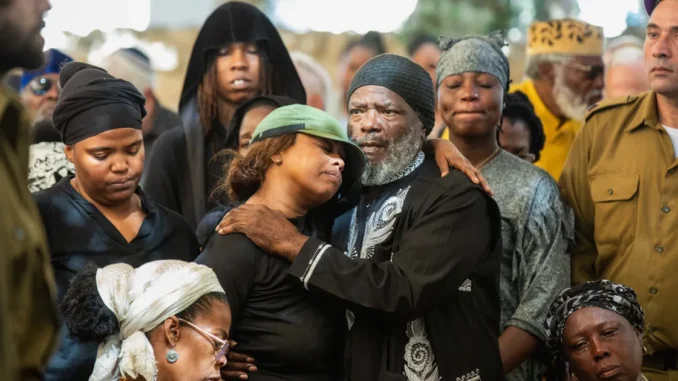
For over half a century, the Black Hebrew Israelite community in Israel has faced unique challenges, navigating complex bureaucratic and legal landscapes to secure fundamental rights. Although members of this community, originally hailing from the United States, have established a vibrant society in the city of Dimona, their status remains uncertain. Calls for full recognition and equal rights are growing, with supporters arguing that it’s time for Israel to officially grant them the rights they deserve as contributors to the country’s cultural and social landscape.
A Brief History of the Black Hebrew Israelites in Israel
The community’s origins in Israel date back to 1969, when a group of African American spiritual seekers led by Ben Ammi Ben-Israel emigrated from the United States, convinced that their ancestral heritage tied them to the ancient Israelites. They believed that returning to the land of their forebears was part of their divine mission and ultimately settled in the Negev desert town of Dimona.
Over the decades, the Black Hebrew Israelites have formed a close-knit, peaceful, and productive community, contributing significantly to Israel’s culture, agriculture, and economy. Known for their commitment to health, education, environmental sustainability, and cultural enrichment, they have established schools, farms, and various social programs that benefit the wider community. Despite these contributions, however, their legal status has long been in flux.
Legal Struggles and Challenges to Citizenship
Since their arrival, Black Hebrew Israelites have encountered significant hurdles in securing Israeli citizenship and permanent residency. For years, they were classified as “temporary residents” and denied the same social benefits, health care, and housing assistance afforded to other groups. Unlike Jews who qualify for automatic citizenship under Israel’s Law of Return, the Black Hebrew Israelites’ unique religious beliefs do not align with Israel’s Orthodox Jewish standards for Jewish identity. As a result, they were excluded from this pathway to citizenship, leaving them in legal limbo.
Although Israel eventually granted the community limited residency rights and work permits in the early 2000s, the process was lengthy, bureaucratic, and insufficient. To this day, many members of the community remain without full citizenship, unable to vote or access the full range of social services available to other Israelis. While Israel granted residency to some second- and third-generation members, a significant number remain in a tenuous legal position, impacting their quality of life and sense of belonging.
Contributions to Israeli Society
Over the years, the Black Hebrew Israelite community has made meaningful contributions to Israel. In Dimona, they have developed eco-friendly farming practices, health-focused dietary programs, and arts and cultural initiatives that draw interest from around the world. The community’s musicians and artists have also gained national attention, representing Israel in cultural exchanges and global forums.
Additionally, the Black Hebrew Israelites have served in the Israeli military, with younger members volunteering for national service, even in the absence of full citizenship. This commitment reflects the community’s desire to contribute to Israeli society fully, despite the limitations they face. Their achievements and the positive impact of their presence in Israel make a compelling case for why they deserve recognition and equal rights.
The Path Forward: Citizenship and Recognition
Supporters of the Black Hebrew Israelite community argue that it is time for Israel to grant full citizenship to its members, recognizing them as integral to the fabric of Israeli society. Legal experts, civil rights advocates, and politicians have called on Israel’s government to address this issue, proposing changes that would formalize the community’s status and rights. This could be done through an amendment to the Law of Return or through a separate legislative act recognizing the unique heritage of Black Hebrew Israelites.
Such recognition would not only offer the community the rights and benefits they deserve but would also strengthen Israel’s global image as a multicultural society open to diverse religious and ethnic identities. Moreover, full citizenship would allow members of the Black Hebrew Israelite community to participate in Israeli democracy, giving them a voice in the policies that shape their lives and contribute to their city’s development.
Broader Implications for Multiculturalism in Israel
Granting citizenship to the Black Hebrew Israelites could also set a precedent for Israel’s treatment of other non-Jewish minority communities, including foreign workers, asylum seekers, and other groups contributing to Israel’s economy and society. Such a move would showcase Israel’s commitment to human rights and inclusivity, sending a message that the country values all communities that contribute positively to its society.
As Israel continues to grapple with its identity as both a Jewish and democratic state, the case of the Black Hebrew Israelites serves as a reminder of the importance of inclusivity and diversity in shaping a national identity. Recognizing this community fully would be a step toward embracing a more expansive view of what it means to be Israeli.
Conclusion
The Black Hebrew Israelite community in Israel has been part of the country’s social and cultural landscape for over five decades. Their commitment to Israel, demonstrated through community service, military contributions, and civic engagement, highlights the valuable role they play in Israeli society. By granting full citizenship and legal recognition, Israel would acknowledge the dignity and humanity of the Black Hebrew Israelites, moving toward a future where diversity is not only tolerated but celebrated.
With growing support from civil society and human rights advocates, the push for full recognition of the Black Hebrew Israelite community is gaining momentum. For a community that has long called Israel home, achieving full citizenship and rights would be a step toward justice, equality, and mutual respect.