
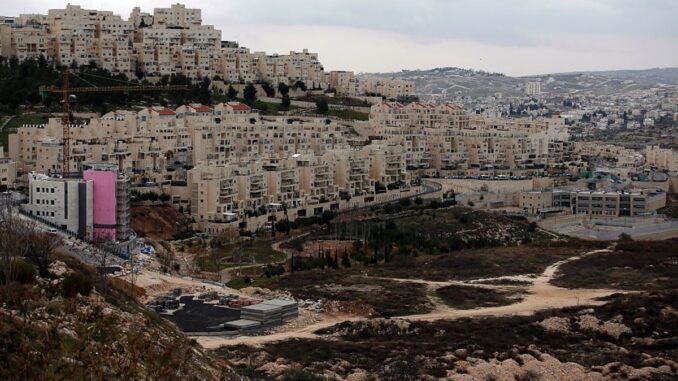
The process of establishing Israeli settlements in the West Bank has long been a controversial and highly scrutinized issue in the Israeli-Palestinian conflict. While some view these settlements as a natural extension of Israel’s sovereignty over territories it captured in the 1967 Six-Day War, others see them as a violation of international law and a significant barrier to peace. Behind the establishment of many settlements lies a process that begins with the seizure of land and the strategic waiting for opportunities to solidify control over that territory. This process, although often informal and subject to legal challenges, has been a central part of Israel’s settlement expansion policy for decades.
Step 1: Seizing the Land
The first step in establishing an Israeli settlement is often the acquisition—or more controversially, the seizure—of land. In many cases, this process involves various tactics, ranging from purchasing land through private individuals or organizations to more aggressive means like military occupation and declaring land as “state land.”
The Israeli government and settler organizations have employed numerous methods to secure land in the West Bank, often using the legal framework to their advantage. A significant portion of the land in the West Bank is designated by Israel as “state land,” and the Israeli military has the authority to declare land as such, even if it was previously used or inhabited by Palestinians. This is justified by Israel on the grounds of security or land that is considered unregistered or “unused.”
Another route to land acquisition is the purchase of property from Palestinian landowners. In some cases, these transactions are transparent, but in many cases, the purchases have been controversial, with allegations of coercion, exploitation, and the use of intermediaries who act on behalf of settler groups. Palestinian landowners who are under pressure from economic hardship or who fear reprisals may be more willing to sell their land to Israeli buyers, even if they do not fully understand the long-term implications of such sales.
Step 2: The Outposts and “Settler Activism”
Once land has been secured—whether through purchase or declaration of state ownership—settlers often establish outposts. These are often small, informal settlements set up by individuals or groups who are ideologically committed to expanding Israel’s territorial claims. Outposts are not initially recognized by the Israeli government, but they serve as a critical first step in establishing an Israeli presence on the land.
Outposts are typically established by groups of settlers who build homes, often without permits from the Israeli authorities. These homes are usually constructed quickly and are sometimes supported by well-organized settler movements. In some cases, these outposts are strategically placed to prevent Palestinian development in the area, effectively encircling Palestinian villages or farmland. These acts of “settler activism” can be seen as a method of de facto territorial acquisition, as the Israeli government often tolerates or later retroactively legalizes these settlements to avoid tensions with the settler movement.
While many of these outposts remain illegal under Israeli law, they are often tolerated or protected by the Israeli military and political leaders who see them as crucial for the “facts on the ground” strategy. These outposts serve as a foundation from which settlers can build their case for more formalized settlements.
Step 3: Legalizing the Outposts
The process of transitioning from an illegal outpost to a fully recognized settlement often involves a combination of legal maneuvering, political influence, and sometimes international pressure. Over time, outposts that have been established for several years can apply for retroactive legal recognition. This can involve petitions to the Israeli High Court of Justice or appeals to the Israeli government to declare them legal settlements.
The process of legalizing outposts typically includes a review of the land’s status and whether it falls under Israeli security needs or state land claims. If the government decides that an outpost is in an area that is strategically important or aligns with Israel’s territorial goals, it may grant approval for the expansion and establishment of formal settlements. This could mean the construction of infrastructure such as roads, schools, and utilities, along with the allocation of funds to encourage settlement growth.
In some cases, the Israeli government has gone so far as to declare outposts “legal” in defiance of international condemnation. The U.N. Security Council and various human rights organizations regularly assert that settlements in the West Bank violate international law, specifically the Fourth Geneva Convention, which prohibits an occupying power from transferring its population into occupied territory. However, Israel rejects this interpretation and often invokes historical, security, and political arguments to justify settlement expansion.
Step 4: Expanding the Settlement
Once a settlement is established and recognized by the Israeli government, the next step is its expansion. This often involves the construction of additional housing units, the creation of new infrastructure, and the annexation of surrounding lands. Settlements in the West Bank tend to expand over time, both horizontally (by building new homes) and vertically (by adding more floors to existing buildings).
The expansion process is often gradual, and new settlement projects are introduced incrementally to avoid overwhelming political opposition. In some cases, settlements expand by building new neighborhoods, while in others, the government may offer incentives such as tax breaks, subsidies, or government-provided land to encourage more Israelis to move into the area.
The goal of this expansion is often to solidify Israeli control over key areas of the West Bank. The Israeli government has consistently argued that settlement expansion is necessary for national security and the protection of Israeli citizens. However, the international community, including the European Union and United Nations, widely views these expansions as illegal under international law.
Step 5: Waiting for the Right Political Moment
The final step in the process of creating and solidifying an Israeli settlement is to wait for the right political opportunity to further entrench the settlement as part of Israel’s territorial claim. This might involve waiting for a change in Israeli political leadership, the shifting dynamics of the Israeli-Palestinian conflict, or international shifts that might make settlement expansion more politically viable.
In recent years, the political climate in Israel has been increasingly favorable to settlement expansion, particularly under the leadership of right-wing governments that support annexation and the expansion of Jewish communities in the West Bank. Prime Minister Benjamin Netanyahu, for example, has long supported the growth of Israeli settlements in the West Bank, often making explicit statements about his intent to apply Israeli sovereignty over the territory.
At the same time, the Israeli government can sometimes use legal, military, or diplomatic means to create “facts on the ground” that make it difficult for future governments to reverse settlement expansions. This strategic approach aims to ensure that settlements become permanent fixtures in the region, regardless of international opposition.
Conclusion: The Cycle Continues
The creation of Israeli settlements in the West Bank is a complex and controversial process that relies on a combination of land acquisition, legal maneuvering, political influence, and the strategic creation of “facts on the ground.” While the international community continues to debate the legality and morality of Israeli settlements, the process itself has been remarkably effective in shifting the demographics of the West Bank and entrenching Israeli control over key areas. For Palestinians, the ongoing expansion of these settlements remains a central obstacle to any meaningful peace process, as it continues to fragment their territory and undermine hopes for a two-state solution. The cycle of land seizure, settlement, and expansion continues to shape the future of the region, with no clear resolution in sight.