
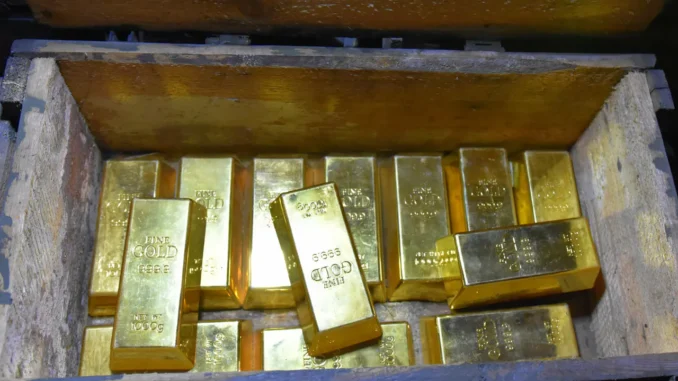
Hezbollah, the powerful Lebanese militant group and political organization, is alleged to be hiding $500 million worth of gold and cash in a secret bunker beneath a hospital in Beirut, according to recent reports from intelligence sources. This revelation has raised new concerns about the group’s financial network and its use of civilian infrastructure for clandestine operations.
The Alleged Bunker: Financial Stronghold Beneath Beirut Hospital
The reports claim that Hezbollah is storing vast amounts of gold and cash in an underground bunker located beneath a hospital in Beirut, the capital of Lebanon. While the exact location of the hospital remains undisclosed due to security concerns, intelligence officials suggest that this hidden stockpile is part of Hezbollah’s strategy to maintain financial stability despite international sanctions and economic pressures on the organization.
Hezbollah, which receives significant financial support from Iran, has been able to sustain itself even amid tightening sanctions from the United States and other Western nations. This alleged hoarding of wealth is seen as a safeguard to ensure the group’s continued operations, both militarily and politically, even in the face of financial restrictions. The stash of gold and cash is believed to be a mix of donations, illicit financing, and investments made by the group over the years.
Hezbollah’s Financial Network: Beyond Conventional Banking
Hezbollah’s financial operations have long been shrouded in secrecy, with the organization relying on a combination of legitimate businesses, charitable fronts, and illicit activities to fund its operations. The group’s extensive financial network spans from money laundering and smuggling operations to donations from supporters in the global Lebanese diaspora.
By allegedly stashing $500 million in a secure bunker, Hezbollah aims to protect itself from external economic pressures, particularly the sanctions targeting its financial system. These sanctions, spearheaded by the U.S. Treasury, have increasingly cut off Hezbollah from the international financial system, forcing the group to turn to alternative methods for safeguarding its assets.
The use of a hospital as the site for the bunker underscores the organization’s controversial practice of embedding its military and financial infrastructure within civilian areas. Hezbollah has faced widespread criticism for using civilian infrastructure, such as schools, mosques, and hospitals, as cover for its activities. Critics argue that this practice endangers civilians and violates international laws that prohibit the use of protected civilian sites for military or financial purposes.
International Reactions and Potential Consequences
The reports of Hezbollah hiding vast sums of money and gold under a hospital have sparked concern among international governments and human rights organizations. The allegations, if proven true, would highlight the risks that Hezbollah’s financial practices pose to the civilian population in Lebanon. Storing large sums of money and gold in civilian areas, particularly in critical infrastructure such as hospitals, increases the risk of these sites becoming targets in any future military conflicts.
The U.S. and its allies have long pressured Lebanon to take stronger action against Hezbollah’s financial activities. Washington views Hezbollah as a terrorist organization and has imposed numerous sanctions on its leaders, members, and affiliated businesses. The revelation of the alleged bunker could intensify these pressures, with calls for stricter enforcement of financial sanctions and greater scrutiny of Hezbollah’s operations in Lebanon.
Israel, a long-time adversary of Hezbollah, has also been closely monitoring the group’s financial and military capabilities. The discovery of such a large stockpile of wealth could lead to further tensions between Israel and Hezbollah, which have been involved in periodic conflicts over the years. Israeli officials have repeatedly warned that Hezbollah’s embedding of military assets within civilian infrastructure in Lebanon could escalate any future conflict, with civilian casualties becoming a likely outcome.
Hezbollah’s Response
As of now, Hezbollah has not publicly responded to the allegations about the hidden bunker. However, the group has historically denied accusations of using civilian areas for military or financial purposes, often framing such claims as part of an anti-Hezbollah propaganda campaign by Israel and Western nations.
Hezbollah’s leadership has previously justified its financial strategies as necessary for the group’s survival and resistance against external threats. With Lebanon in the midst of an economic crisis, the group has portrayed itself as a defender of Lebanon’s sovereignty and its people, even as it faces growing scrutiny over its financial activities.
Lebanon’s Fragile Political and Economic Situation
The Lebanese government, which includes Hezbollah members in key positions, has so far been unable to rein in the group’s military or financial activities. Lebanon is grappling with one of the worst economic crises in its history, with rampant inflation, a collapsing currency, and widespread poverty. In this context, Hezbollah’s financial independence—whether through Iranian funding or alleged stockpiles like the one under the Beirut hospital—allows the group to exert significant influence over Lebanese politics and society.
The discovery of a secret cache worth $500 million, if confirmed, would further complicate Lebanon’s internal dynamics, as the public grapples with economic hardships while Hezbollah maintains significant financial resources. The government, already weakened and divided, is unlikely to take direct action against Hezbollah’s financial network without facing severe political backlash.
Conclusion
The allegations of Hezbollah hiding $500 million in gold and cash in a bunker beneath a Beirut hospital underscore the group’s reliance on unconventional financial tactics to maintain its power and influence. While the full extent of the claims remains unverified, the reports have reignited concerns about Hezbollah’s use of civilian infrastructure for its operations, a practice that risks endangering the population and further destabilizing Lebanon.
As international pressure mounts, Hezbollah’s financial practices will remain a focal point for governments seeking to curb the group’s influence in Lebanon and the wider region. However, with the Lebanese state in a fragile condition, the chances of meaningful action against Hezbollah’s financial empire remain uncertain.