
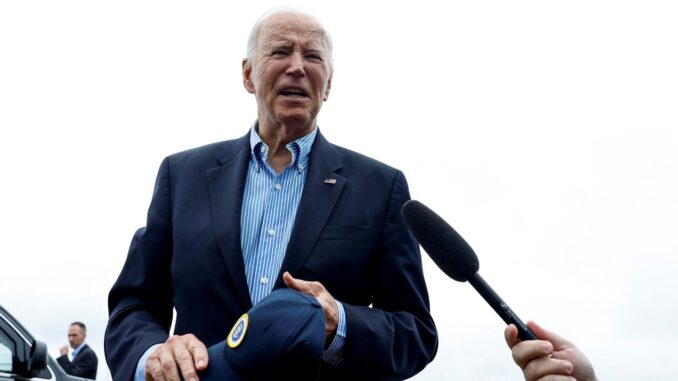
President Joe Biden revealed that he has a “good idea” of how and when Israel plans to respond to a recent attack by Iran, sparking speculation about potential military actions in the already volatile Middle East. Speaking during a press conference, Biden’s comments came after reports of escalations involving Iranian-backed militias targeting Israel, further complicating the region’s security landscape.
Without divulging specific details, Biden hinted at close coordination between the U.S. and Israel regarding the next steps in addressing Iran’s aggressive moves. The president reaffirmed the United States’ strong support for Israel’s security while emphasizing the importance of a measured response to avoid a broader conflict in the region.
Rising Tensions with Iran
Tensions between Israel and Iran have been escalating in recent months, with various Iranian proxy forces launching attacks on Israeli positions. The strikes have intensified the long-standing rivalry between the two nations, whose hostilities frequently play out indirectly through proxy groups across the Middle East.
Iran has supported and armed groups like Hezbollah in Lebanon, Hamas in Gaza, and Shiite militias in Iraq and Syria, which have regularly clashed with Israeli forces. Israel, for its part, has carried out airstrikes targeting Iranian military infrastructure in Syria, as well as Iranian officials and militia groups believed to be planning attacks.
The latest incident, believed to involve a direct or proxy Iranian attack on Israeli interests, has heightened concerns that a larger military confrontation between Israel and Iran could be imminent. Biden’s comments suggest that Israel is preparing a carefully calculated response to these provocations, likely in consultation with the U.S.
Close U.S.-Israel Coordination
President Biden made it clear that the U.S. is closely monitoring the situation and is fully briefed on Israel’s plans. The nature of his remarks suggests that Washington is deeply involved in supporting Israel’s strategic decision-making process, reflecting the longstanding military and intelligence cooperation between the two nations.
“We have a good sense of what Israel is planning, how they plan to respond, and the timing of that response,” Biden said. He did not provide additional details but assured that both countries are aligned in their efforts to address the threat posed by Iran and its proxies.
The U.S. has long been one of Israel’s key allies, providing billions in military aid annually and offering diplomatic support in international forums. The Biden administration has reaffirmed its commitment to Israel’s security, though it has also sought to re-engage diplomatically with Iran over its nuclear program—an effort that has been complicated by ongoing hostilities.
A Delicate Balance
Biden’s remarks point to a balancing act that the U.S. is navigating: supporting Israel’s security while also attempting to manage tensions with Iran to prevent further destabilization in the Middle East. While Israel may be preparing for retaliatory strikes or other military measures, the U.S. remains cautious about any actions that could trigger a larger regional war.
The Biden administration has been working to restore the 2015 Iran nuclear deal (formally known as the Joint Comprehensive Plan of Action or JCPOA), which former President Donald Trump withdrew from in 2018. However, progress on reviving the deal has stalled, and Iran has since expanded its nuclear activities, further straining diplomatic efforts. Additionally, Iran’s support for militant groups attacking U.S. and Israeli interests complicates any potential negotiations.
The administration’s efforts to curb Iran’s nuclear ambitions while maintaining peace between Israel and Iran have led to a complex diplomatic situation. Any military escalation, particularly in the wake of an Israeli response, could jeopardize these negotiations and spark wider regional conflicts involving other players such as Lebanon’s Hezbollah or even Syria.
Potential Regional Fallout
While Biden hinted at Israeli plans for retaliation, the broader geopolitical consequences of any military action could be significant. If Israel strikes Iranian targets directly or attacks Iranian proxies in countries like Syria or Lebanon, there is a risk of escalation, drawing other regional actors into the conflict. Iran could retaliate with missile strikes on Israel or against U.S. interests in the region, such as military bases or oil infrastructure.
Iran’s extensive network of proxy groups throughout the Middle East makes it difficult to predict how wide-ranging the fallout from a confrontation could be. Hezbollah in Lebanon, which possesses a vast stockpile of rockets, could launch an attack on Israel in response, triggering another round of cross-border violence. Meanwhile, Iranian-backed militias in Iraq or Yemen could target U.S. assets in the region, further destabilizing the situation.
The potential for regional escalation underscores the high stakes of Israel’s anticipated response and the delicate position the Biden administration is in as it seeks to prevent a broader conflict while ensuring that Israel can defend itself.
U.S. Support for Israel
Biden reiterated the U.S. commitment to Israel’s security, stating that Israel has the right to defend itself against aggression, particularly from Iranian-backed forces. “We will continue to support Israel, as we have always done, in ensuring they can defend themselves and their people,” Biden said.
The president’s comments reflect the broader U.S. stance on Middle East security, where Washington views Iran as one of the primary threats to regional stability, particularly due to its nuclear ambitions and support for armed militias across the region. The U.S. has also been vocal in its condemnation of Iranian-backed rocket attacks on Israel and has consistently backed Israel’s right to respond to such attacks.
Conclusion: A Fragile Moment
As the situation develops, all eyes will be on Israel’s next move and how it aligns with U.S. efforts to manage tensions with Iran. While Biden’s comments indicate that the U.S. is fully informed of and supportive of Israel’s plans, the broader challenge remains: preventing a localized conflict from spiraling into a regional war that could draw in multiple actors and threaten global security.
The coming weeks could prove critical in shaping the future of U.S.-Israeli relations, regional stability in the Middle East, and the Biden administration’s broader strategy toward Iran. With the possibility of military action looming, the world is watching to see how this complex geopolitical chessboard unfolds.