
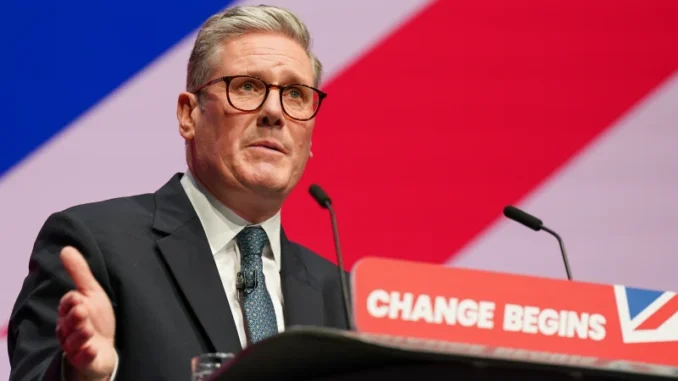
In a significant moment highlighting ongoing tensions within the Labour Party, Keir Starmer, the current Labour leader, confronted a heckler during a recent conference focused on the Gaza crisis. The event, intended to address the humanitarian issues arising from the ongoing conflict, was marred by protests from a vocal minority, reflecting the lingering divisions that continue to challenge the party.
Context of the Conference
The conference, held in response to the escalating situation in Gaza, aimed to foster dialogue around the humanitarian crisis and explore ways the UK can provide support to those affected. Starmer, who has sought to steer the Labour Party towards a more centrist and moderate stance since his leadership began, aimed to reaffirm the party’s commitment to addressing pressing global issues, including humanitarian crises.
However, the event quickly took a contentious turn when a heckler, identified as a supporter of former leader Jeremy Corbyn, interrupted Starmer’s speech. The heckler shouted accusations of betrayal, reflecting the ongoing discontent among some Labour members regarding Starmer’s leadership and approach to foreign policy, particularly concerning the Israeli-Palestinian conflict.
Starmer’s Response
In a display of firmness, Starmer responded directly to the heckler, emphasizing the importance of maintaining a respectful dialogue during discussions about sensitive topics like Gaza. “This is a serious issue, and we must treat it as such,” he asserted, calling for decorum and respect for the voices that need to be heard in such discussions.
His immediate response was met with a mix of applause and further dissent, highlighting the divided opinions within the audience. Starmer’s remarks underscored his determination to lead the party away from the confrontational tactics often associated with the Corbyn era, seeking to establish a more measured and diplomatic tone.
The Heckler’s Background
The heckler, described as a prominent figure among Labour’s far-left faction, represents a growing frustration among Corbyn’s supporters regarding Starmer’s leadership style and policies. Many in this group feel alienated by what they perceive as a shift away from the principles that guided Corbyn’s tenure, particularly regarding issues of social justice, foreign policy, and solidarity with Palestine.
This incident is not isolated; it reflects a broader struggle within the Labour Party as it grapples with its identity post-Corbyn. The heckler’s outburst, coupled with Starmer’s sharp rebuttal, reveals the ongoing ideological battle that has characterized Labour’s recent history.
Reactions to the Confrontation
The confrontation has sparked varied reactions within the party and the public. Supporters of Starmer have applauded his assertiveness, viewing it as a necessary step in quelling dissent and promoting a cohesive message on humanitarian issues. They argue that a clear stance is essential for the party to regain credibility and support, particularly among centrist voters who have been wary of Labour’s far-left elements.
Conversely, Corbyn’s supporters have expressed outrage over the heckling response, claiming it exemplifies Starmer’s failure to engage with grassroots voices within the party. Critics argue that silencing dissenting opinions does not foster unity and could further alienate those who feel marginalized by the party’s current direction.
The Broader Implications for Labour
This incident serves as a microcosm of the larger challenges facing the Labour Party. As Starmer continues to navigate the delicate balance between re-establishing the party’s credibility and appeasing its diverse membership, confrontations like this one underscore the complexities of leadership in a divided political landscape.
The heckler’s outburst also raises questions about how Labour will address issues of foreign policy moving forward. Many members are eager for a more vocal stance on global injustices, particularly regarding Palestine, while others advocate for a more measured approach that seeks diplomatic solutions over confrontational rhetoric.
Moving Forward
In the aftermath of this confrontation, Starmer’s leadership will likely face scrutiny as he continues to redefine Labour’s identity and objectives. As the party approaches future elections, the ability to reconcile differing perspectives within its ranks will be crucial in presenting a unified front to the electorate.
Starmer has committed to addressing the humanitarian crisis in Gaza while also promoting a message of peace and dialogue. However, the challenges of navigating internal divisions and external pressures will require astute political maneuvering and a willingness to engage with diverse voices within the party.
In conclusion, the incident at the Gaza conference serves as a reminder of the ongoing tensions within the Labour Party and the significant work that lies ahead for its leadership. As Starmer seeks to chart a new course for Labour, fostering an environment of respect and open dialogue will be essential in rebuilding trust and unity among its members. The road to recovery may be fraught with challenges, but it also presents an opportunity for the party to reaffirm its commitment to social justice and humanitarian issues, reflecting the values that many Labour members hold dear.