
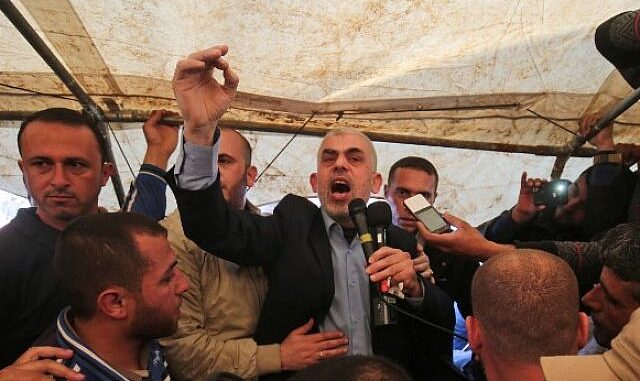
A new report has shed light on a series of letters written by Yahya Sinwar, the leader of Hamas in Gaza, to his 10-year-old son, in which he sought to instill deep-seated hatred for Israel. The content of the letters, which were reportedly intercepted and analyzed by Israeli intelligence, highlights Sinwar’s long-term ideological grooming of his child with the aim of perpetuating hostility toward the Jewish state.
Sinwar, a prominent figure in Hamas, has long been a key player in the militant organization’s attacks on Israel and its efforts to maintain control over the Gaza Strip. The letters, according to sources familiar with the matter, reveal how Hamas leaders are passing their militant ideology down to the next generation, encouraging children to view Israel as an eternal enemy.
The Letters: A Legacy of Hate
The report details how Sinwar, in his letters, framed the Israeli-Palestinian conflict as a lifelong struggle that his son must be prepared to carry on. He reportedly urged the young boy to internalize a worldview rooted in violent resistance and to reject any notion of peaceful coexistence with Israel. According to the intercepted communications, Sinwar emphasized the importance of continuing the fight against Israel, describing it as a moral and religious duty.
The content of the letters paints a disturbing picture of Sinwar’s efforts to raise his son with a sense of duty to fight Israel, mirroring the broader indoctrination tactics often used by Hamas to radicalize children in Gaza. In his writings, Sinwar reportedly glorified acts of violence against Israelis, including suicide bombings and rocket attacks, portraying such actions as noble and heroic.
By shaping his son’s beliefs at such a young age, Sinwar appears to be fostering a generational cycle of hatred and violence, ensuring that the militant ideology of Hamas persists beyond his own lifetime. This type of familial indoctrination is not uncommon in extremist groups, where leaders often encourage their offspring to carry on the cause, creating an enduring legacy of conflict.
Hamas’ Strategy: Weaponizing Youth
Hamas, the Islamist militant group that has governed the Gaza Strip since 2007, has been widely criticized for its use of children in its propaganda and military efforts. The organization operates summer camps and schools where children are taught to revere armed resistance and view martyrdom in the fight against Israel as a path to glory.
According to analysts, Sinwar’s letters to his son are part of a broader strategy employed by Hamas to weaponize youth. The group has been accused of recruiting children for military training and involving them in operations, including as human shields or in roles supporting combatants. This strategy, aimed at cultivating a new generation of fighters, ensures that the conflict remains deeply entrenched in Palestinian society, with hatred for Israel passed down from one generation to the next.
Hamas has also been known to use educational materials that glorify violence against Israelis and Jews, promoting the idea that armed struggle is the only means of achieving Palestinian liberation. Such indoctrination is facilitated through both formal education and informal messaging from leaders like Sinwar, who use personal and public channels to instill their ideological beliefs in children.
International Reaction and Concerns
The revelations about Sinwar’s letters have raised fresh concerns about the prospects for peace in the region. International observers have long condemned Hamas for promoting violence and extremism, particularly in its efforts to radicalize children. The use of children as tools in the conflict has drawn sharp criticism from human rights organizations, which argue that such practices violate international laws protecting the rights of minors.
The international community has frequently called for measures to protect Palestinian children from being drawn into the cycle of violence, urging both Palestinian and Israeli leaders to prioritize education and peacebuilding efforts. However, the report on Sinwar’s letters underscores the challenges of breaking this cycle when extremist leaders actively work to instill hatred and resentment in the younger generation.
Israel, in response to the report, has reiterated its position that Hamas is a terrorist organization that poses a significant threat not only to Israel but also to the Palestinian people, particularly children who are caught in the crossfire of indoctrination and conflict. Israeli officials have long accused Hamas of using civilians, including children, as human shields during military operations, a claim that has been supported by various international reports.
A Grim Outlook for Peace
The report on Sinwar’s letters to his son adds to the bleak outlook for peace between Israel and Hamas. While efforts to broker a ceasefire and pursue long-term peace initiatives have persisted over the years, the continued promotion of militant ideology among young Palestinians poses a significant obstacle. The generational transfer of hatred, as exemplified by Sinwar’s letters, suggests that Hamas is committed to a protracted conflict with Israel, with little interest in pursuing peaceful solutions.
Sinwar, who has been Hamas’ leader in Gaza since 2017, is seen as one of the most hardline figures within the organization. His tenure has been marked by a series of escalations with Israel, including major conflicts in 2021 and 2023, as well as numerous smaller skirmishes. Under his leadership, Hamas has also worked to strengthen its military capabilities, amassing rocket stockpiles and fortifying its network of underground tunnels, known as the “Gaza Metro.”
As Hamas continues to entrench its power in Gaza, the prospects for peace remain elusive, with leaders like Sinwar shaping the next generation’s view of the conflict in deeply militant terms. For Israel, this means facing a future where a new generation of Palestinians is raised to view it as an eternal enemy, complicating any potential for diplomatic breakthroughs.
Conclusion: A Perpetuation of Conflict
The report on Sinwar’s letters to his 10-year-old son offers a troubling glimpse into the mindset of Hamas leaders and their vision for the future of the Israeli-Palestinian conflict. By instilling hatred in their children and glorifying violence as a path to liberation, leaders like Sinwar are ensuring that the conflict is passed down to future generations, perpetuating a cycle of violence and enmity.
For those working toward peace in the region, the challenge lies not only in addressing the immediate political and military dynamics but also in countering the deep-seated ideological forces that sustain the conflict. As long as children are raised with the belief that violence is the only solution, the dream of a peaceful resolution between Israelis and Palestinians will remain out of reach.