
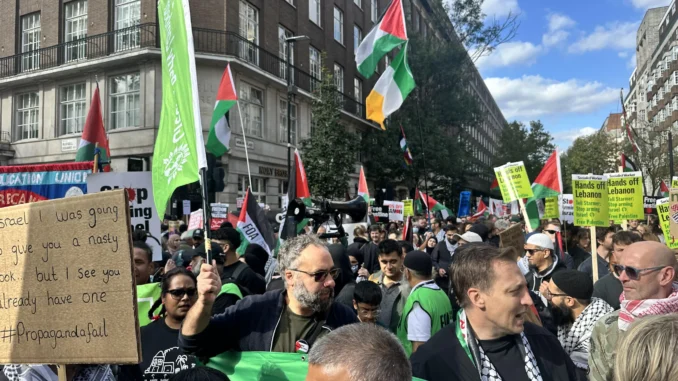
In recent weeks, the ongoing Israel-Palestine conflict has reignited fervent protests around the world, with demonstrators advocating for Palestinian rights and voicing their opposition to Israeli actions in the region. However, the latest demonstration in support of Palestine took a controversial turn, as pro-Hezbollah placards were prominently displayed, drawing attention and sparking debate about the implications of such symbols in the context of the conflict.
Background of the Demonstration
The latest Palestine demonstration, held in a major city, attracted thousands of participants who gathered to express solidarity with the Palestinian people amidst escalating tensions in the region. The protests were organized in response to recent developments, including military actions, displacement of civilians, and calls for greater international attention to the humanitarian crisis in Gaza.
While the demonstration was largely peaceful, the presence of pro-Hezbollah imagery raised eyebrows and ignited discussions among observers, activists, and policymakers. Hezbollah, the Lebanese militant group and political party, has long been involved in the conflict, supporting Palestinian groups and openly opposing Israel. Its involvement has often polarized opinions, especially in the context of international diplomacy.
The Display of Pro-Hezbollah Placards
During the demonstration, numerous participants carried placards emblazoned with messages supporting Hezbollah, alongside traditional Palestinian symbols such as the Palestinian flag and images of notable Palestinian figures. Slogans expressing solidarity with Hezbollah and its leader, Hassan Nasrallah, were visible among the crowd.
This display of pro-Hezbollah sentiment at a Palestine rally underscores the complex nature of the political landscape surrounding the Israeli-Palestinian conflict. For some demonstrators, Hezbollah represents a broader resistance against Israeli occupation and perceived aggression, while others view the group as a controversial and divisive force that complicates efforts for peace in the region.
Reactions to the Pro-Hezbollah Display
The inclusion of pro-Hezbollah placards at the demonstration elicited mixed reactions from various quarters. Supporters of the demonstration argued that displaying solidarity with Hezbollah is a legitimate expression of resistance against what they perceive as Israeli oppression. They contend that Hezbollah’s role in supporting Palestinian factions should not be overlooked and that solidarity among groups opposing Israel is crucial in the struggle for Palestinian rights.
However, critics raised concerns about the implications of endorsing a group that has been designated as a terrorist organization by several countries, including the United States and Israel. Many worry that aligning with Hezbollah could alienate potential allies in the pursuit of Palestinian self-determination and peace negotiations. Moreover, they argue that such displays can lead to a broader narrative that equates the Palestinian struggle with militant extremism, undermining the legitimate calls for human rights and justice.
The Broader Context
The intersection of Palestinian activism and support for Hezbollah highlights the broader complexities of the Israeli-Palestinian conflict, which is deeply rooted in historical grievances, geopolitical tensions, and divergent narratives. The ongoing violence in the region has fueled passionate responses from various factions, complicating efforts for a unified approach to achieving peace.
Moreover, the presence of Hezbollah in this context is indicative of the larger regional dynamics involving Iran, Syria, and various non-state actors who share a common animosity towards Israel. These connections often lead to discussions about the ramifications for international diplomacy and the future of peace initiatives in the Middle East.
Conclusion
The display of pro-Hezbollah placards at the latest Palestine demonstration serves as a reminder of the intricate relationships and sentiments that underpin the Israeli-Palestinian conflict. While many participants advocate for Palestinian rights, the embrace of Hezbollah raises important questions about the implications of aligning with militant groups in the pursuit of justice.
As the situation continues to evolve, it is crucial for activists, policymakers, and observers to navigate these complexities thoughtfully, fostering dialogue that prioritizes human rights and the pursuit of lasting peace in the region. Ultimately, the voices of the Palestinian people deserve to be heard, but the paths toward achieving justice must be carefully considered in the context of the broader geopolitical landscape.