
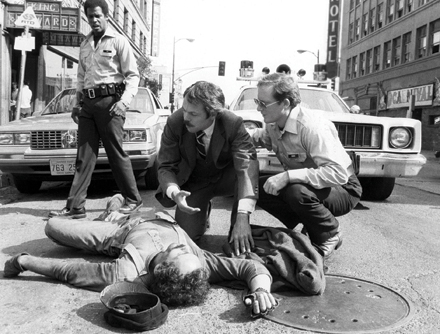
A new Israeli TV series, Kaplan Street Blues, has captured the growing concerns within Israel’s law enforcement community, shedding light on how the country’s police forces have increasingly been influenced by the far-right political movement. The show portrays a fictionalized account of police officers struggling with the rising influence of extremist ideologies within their ranks, offering a powerful critique of the erosion of democratic values in one of the Middle East’s most advanced democracies.
The series, which premiered to critical acclaim, offers a stark view of the changing dynamics within Israel’s police forces. Set against the backdrop of Jerusalem and Tel Aviv, Kaplan Street Blues explores the lives of several police officers who begin to grapple with the rise of far-right nationalist politics and the growing presence of ultranationalist factions within their own institutions.
A Reflection of Real-World Concerns
The TV series has sparked intense debate in Israel, where concerns about the political shift in the police force have been mounting for years. Critics argue that the country’s law enforcement is increasingly becoming politicized, with some police officers and higher-ranking officials aligned with far-right views and increasingly sympathetic to radical nationalist agendas. This has led to fears that the police may no longer be impartial, but instead act as a tool for advancing specific political interests, undermining trust in the institution.
In recent years, there have been reports of police brutality targeting Palestinian citizens, protest suppression, and a rise in hate crimes perpetrated by individuals affiliated with far-right movements. These incidents have drawn the attention of human rights organizations, which argue that Israel’s law enforcement system has begun to mirror the growing influence of far-right ideologies in other parts of society.
The Rise of Far-Right Nationalism in Israel
The growing influence of the far right in Israel’s police force is tied to broader political shifts within the country. Over the past decade, the rise of right-wing populism and nationalist politics has altered the political landscape, with key figures in Israel’s government, including former Prime Minister Benjamin Netanyahu and current Prime Minister Naftali Bennett, embracing a hardline stance on security issues and the Israeli-Palestinian conflict.
Israel’s ultranationalist movement, which advocates for a greater Israel and a more stringent approach to Palestinian territories, has found fertile ground in the police and military establishments. Many police officers, especially those in senior ranks, have aligned themselves with these ideologies, seeing them as a way to strengthen national security and promote a more robust response to what they perceive as internal and external threats.
The show’s depiction of these dynamics—police officers torn between their professional duty and the political pressures surrounding them—mirrors concerns within Israel’s society that law enforcement is becoming increasingly militarized and ideologically driven. Kaplan Street Blues is a sobering reflection of this changing reality, where law enforcement’s traditional role as a neutral body upholding the rule of law is being undermined by the encroachment of far-right politics.
Political Polarization and Institutional Strain
One of the series’ most poignant storylines revolves around the growing polarization within the Israeli police force itself. Officers who were once focused solely on protecting public safety now find themselves at odds with colleagues who view their actions through the lens of political ideology. This division is particularly acute in police precincts located in areas of high tension, such as East Jerusalem, where the police have been accused of systemic discrimination against Palestinian residents.
The TV series also touches on the way Israel’s police force has become more militarized in recent years, particularly in its approach to managing civil unrest. The portrayal of officers using excessive force to control protests or suppress dissent mirrors real-world criticisms that the police are increasingly using tactics more suited to warfare than policing in a democratic society. The growing public perception that the police are aligned with the government’s right-wing agenda has led to a deterioration of public trust, especially among Israel’s Arab and left-leaning Jewish citizens.
Police, Politics, and Public Trust
The increasing politicization of the police force is not just a problem in Israel; it is a global issue that is seen in many democracies as far-right groups gain influence in law enforcement. The series captures the dilemma faced by ordinary officers who are caught in a system where their professional ethics are at odds with the rising political currents in their country. This tension is amplified by the increasing public distrust of police forces in Israel, where citizens feel that their government is no longer acting in their best interests, but rather in the interests of specific political and ideological groups.
The show also highlights the ethical challenges that officers face when asked to carry out orders that conflict with their personal beliefs or the principles of justice. As the far-right continues to influence Israeli politics, the line between law enforcement and political enforcement becomes increasingly blurred, leading to dangerous implications for democracy and governance.
Conclusion: A Stark Warning
Kaplan Street Blues offers a powerful and timely commentary on the changing nature of law enforcement in Israel, where police are seen not only as enforcers of the law but as agents of political power. The show serves as a warning about the dangers of political polarization and the erosion of democratic institutions.
By portraying the struggle of officers caught between their duty and political allegiance, Kaplan Street Blues shines a light on a critical issue facing Israel today—how the far-right influence is reshaping the country’s police force and, by extension, its future. The series has sparked much-needed conversation about the role of the police in a democracy, and whether it is possible to maintain an impartial force in a society becoming increasingly divided along ideological lines.
As Israel grapples with the consequences of this shift, Kaplan Street Blues serves as a timely reminder of the fragility of democratic values in the face of growing political extremism. The series may be fictional, but its underlying message is painfully real: when institutions like the police lose their independence, the very fabric of democracy begins to unravel.