
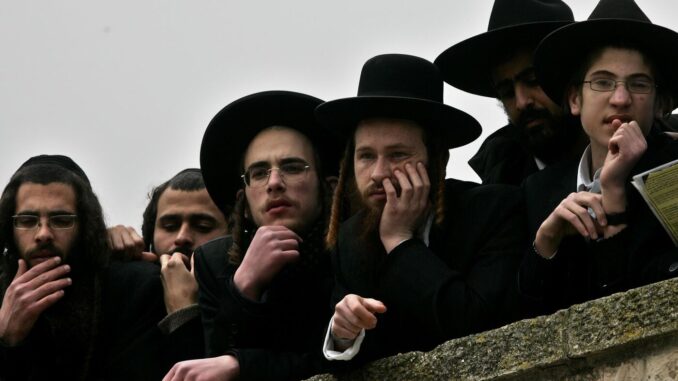
In a bold move that could reshape the dynamics between Israel’s secular and ultra-Orthodox communities, the Israeli Attorney General (AG) has called on the army to expedite the issuance of draft orders to approximately 7,000 ultra-Orthodox men. This directive responds to longstanding debates over mandatory military service in Israel and seeks to address rising concerns about inequality within the country’s conscription laws.
Background: Exemptions and Tensions
Under Israeli law, military service is compulsory for most Jewish citizens at the age of 18. However, ultra-Orthodox men have traditionally been granted exemptions if they are full-time religious scholars, a policy that dates back to Israel’s founding and is meant to protect religious study. This exemption has remained a contentious issue, with secular Israelis arguing that it places an undue burden on non-Orthodox citizens, while ultra-Orthodox leaders assert that their community contributes to the nation through religious dedication.
Over the years, efforts to mandate ultra-Orthodox military enlistment have faced numerous legal and political hurdles, leading to periodic clashes between secular and religious communities. Previous attempts to legislate mandatory service for ultra-Orthodox men have been met with resistance and even large-scale protests, with many in the ultra-Orthodox community perceiving military conscription as an infringement on their way of life.
The Attorney General’s Directive
The AG’s latest directive is viewed as a significant step toward resolving a longstanding inequality in the country’s conscription system. It comes in response to mounting public pressure and recent legal challenges to the army’s exemption policies, particularly as Israel’s defense establishment faces increased staffing demands. The AG contends that the current policy, which exempts large segments of the ultra-Orthodox population from service, undermines national unity and fairness, placing undue strain on other sectors of society.
The order to draft 7,000 ultra-Orthodox men could have broad social and political implications, affecting Israel’s coalition government, which relies on ultra-Orthodox parties for support. Many political leaders have voiced support for a phased approach to ultra-Orthodox conscription, yet ultra-Orthodox political factions maintain their staunch opposition, arguing that compulsory service for religious scholars is incompatible with Jewish law.
Potential Impacts on Israel’s Military and Society
The Israeli military could see immediate benefits from an increase in manpower, particularly at a time when regional security challenges are escalating. The IDF (Israel Defense Forces) has long sought to integrate ultra-Orthodox recruits, offering specific units and accommodations to respect their religious practices. Programs such as the Netzah Yehuda Battalion have been created to support religious observance among soldiers, aiming to make military service more accessible for ultra-Orthodox men.
However, implementing a large-scale draft of ultra-Orthodox men is likely to present challenges, as many within the community may resist the notion of military service altogether. Despite the army’s accommodations, ultra-Orthodox leaders argue that even limited conscription disrupts the traditional framework of their community, where religious study is held in the highest regard.
If enforced, the AG’s directive could also reshape Israeli society by pushing ultra-Orthodox communities into closer contact with broader Israeli society. While military service is often seen as a unifying experience that promotes a sense of shared identity, the ultra-Orthodox community has historically maintained a separate identity, with limited interaction with secular Israeli society.
Political Reactions and Challenges Ahead
The Attorney General’s directive has drawn mixed reactions across the political spectrum. Proponents argue that equal service obligations will strengthen national cohesion and reduce societal divisions. Many secular and centrist parties view ultra-Orthodox conscription as essential for achieving greater equality and easing tensions between religious and secular communities.
Ultra-Orthodox political factions, however, have condemned the AG’s order, asserting that forced conscription could erode their community’s way of life. Leaders from the ultra-Orthodox community have promised to fight the directive, hinting at the possibility of mass protests and legal action if the draft orders are issued.
Israel’s current coalition government, which includes ultra-Orthodox parties, is in a delicate position. The AG’s directive places pressure on Prime Minister Benjamin Netanyahu’s administration, which must balance the demands of secular Israelis for equal military service with the interests of ultra-Orthodox parties, who are critical to the coalition’s stability.
The Path Forward: Balancing Equality and Religious Freedom
The question of ultra-Orthodox conscription strikes at the heart of one of Israel’s most complex social and political challenges: how to balance equality and national duty with the right to religious freedom. The Attorney General’s directive to issue 7,000 draft orders signals a push for reform that has been long in the making, but the road ahead is fraught with potential conflict.
The directive also raises questions about how ultra-Orthodox integration into the workforce could be impacted by military service. Advocates argue that military service can serve as a gateway for ultra-Orthodox men to acquire skills and employment opportunities, helping alleviate economic pressures in a community where high poverty rates are a persistent issue.
As the army prepares to issue these draft orders, Israel finds itself at a crossroads. The ultimate resolution to the ultra-Orthodox conscription debate will require careful negotiation, compromise, and a shared commitment to unity amidst diversity. Whether the directive is implemented in its current form or revised, the coming months are likely to see renewed dialogue on a question that has shaped Israeli society for decades.