
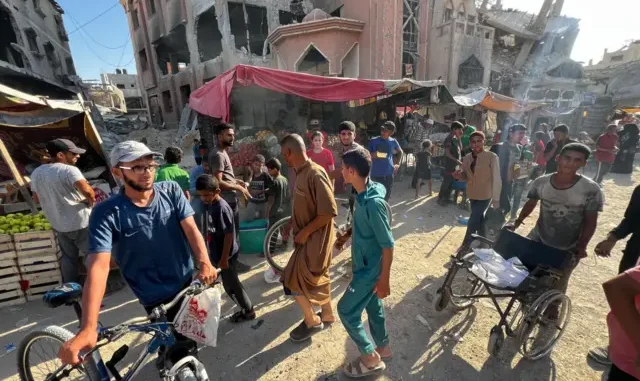
As Israel grapples with the logistics of providing humanitarian aid to Gaza amidst ongoing conflict, the government is reportedly considering outsourcing the task to international organizations or private entities. The complex situation in Gaza, with its dense population and strained infrastructure, has made delivering essential supplies such as food, water, and medical aid both critical and challenging. Against this backdrop, a philanthropist with deep ties to the region has emerged with a pitch to help facilitate aid distribution, aiming to bridge the gap between politics and urgent humanitarian needs.
The Humanitarian Crisis in Gaza
The Gaza Strip, home to over two million Palestinians, has long been the epicenter of humanitarian crises due to frequent military clashes, a prolonged blockade, and limited access to essential services. The recent escalation in violence between Israel and Hamas has exacerbated these challenges, leaving many residents without basic necessities. International calls for humanitarian relief have intensified, but delivering aid to Gaza presents logistical, security, and political challenges that Israel must navigate carefully.
Israel’s blockade on Gaza, imposed for security reasons to prevent the smuggling of weapons to militant groups like Hamas, complicates the movement of goods into the region. While Israel allows the entry of humanitarian aid through designated crossings, concerns about aid being misused by Hamas, which controls Gaza, have led to heightened scrutiny and restrictions on the flow of supplies.
Israel’s Consideration of Subcontracting Aid Delivery
To address the growing crisis while maintaining security controls, Israel is reportedly considering subcontracting aid delivery to trusted international organizations or private entities. By outsourcing the logistics, Israel aims to ensure that aid reaches the civilians who need it most, without being diverted to Hamas or other militant groups. This approach, however, requires a careful balancing act—Israel must find partners who are neutral, trustworthy, and capable of navigating Gaza’s volatile environment.
The idea of subcontracting has gained traction as Israel faces pressure from the international community to ensure humanitarian corridors remain open, while also maintaining its security measures. The task is complicated by Hamas’s presence and the risk that aid supplies could inadvertently support militant activities.
The Philanthropist’s Pitch: A Neutral, Efficient Solution
As Israel explores potential options, a prominent philanthropist with a history of humanitarian work in the region has stepped forward with a proposal to manage aid delivery into Gaza. The philanthropist, who has requested anonymity in the early stages of negotiations, has suggested leveraging his established network of humanitarian organizations and local contacts to create a more efficient and accountable system for delivering aid.
The philanthropist’s pitch focuses on transparency and neutrality, key concerns for both Israel and international donors. By creating a third-party mechanism that is insulated from political interests, the philanthropist hopes to establish a trusted supply chain that ensures aid is directed solely to civilians. His proposal includes working closely with local NGOs, hospitals, and relief agencies already operating in Gaza, thereby enhancing the effectiveness of aid distribution while minimizing the risk of interference by militant groups.
Key Features of the Proposal
The philanthropist’s plan includes several key elements designed to address the unique challenges of Gaza:
- Independent Monitoring: A core component of the proposal is the use of independent monitors to track and verify the distribution of aid. This would provide assurances to Israel and international donors that supplies are reaching the intended recipients and are not being diverted.
- Partnership with Local Organizations: The philanthropist proposes partnering with trusted local organizations and medical facilities in Gaza, many of which have long-standing relationships with international relief agencies. These partnerships would help ensure that aid is distributed effectively and fairly.
- Digital Tracking Systems: To further enhance transparency, the plan includes a digital tracking system that would monitor aid shipments in real-time, providing accountability and reducing the chances of corruption or misappropriation.
- Neutral Branding: To avoid political tensions, the aid would be distributed under neutral branding, ensuring that the process remains humanitarian-focused and does not become a flashpoint for conflict between Israel and Hamas.
The Challenges Ahead
While the philanthropist’s proposal offers a potentially viable solution, it is not without challenges. Any third-party aid delivery system would need to navigate Gaza’s complex security situation, where the presence of militant groups and ongoing hostilities pose significant risks. There are also questions about how such a system would be implemented without infringing on Israel’s security protocols or inadvertently legitimizing Hamas’s control over Gaza.
Additionally, the political sensitivities surrounding Gaza make it difficult to find a solution that satisfies all parties. Israel’s security concerns are paramount, but at the same time, the international community is pressuring for increased humanitarian access to prevent further suffering among Gaza’s civilian population.
The philanthropist’s involvement, while promising, will require extensive collaboration with both Israeli and Palestinian authorities, as well as buy-in from international donors and organizations. If successful, the initiative could serve as a model for depoliticizing humanitarian aid in conflict zones, but its implementation will depend on overcoming the deep-rooted mistrust between the various stakeholders involved.
Conclusion
As Israel weighs its options for delivering aid to Gaza, the proposal from a seasoned philanthropist offers a potentially neutral and transparent solution to one of the most pressing humanitarian crises in the Middle East. By subcontracting aid delivery to a trusted third party, Israel could ensure that vital supplies reach Gaza’s civilian population without compromising its security concerns.
However, the path forward is fraught with political and logistical challenges. Whether this proposal can succeed will depend on the ability to create a system that is both secure and effective, while navigating the complex and often contentious dynamics of the Israeli-Palestinian conflict. If implemented, this initiative could provide a lifeline to Gaza’s struggling population, while also setting a precedent for future humanitarian efforts in conflict zones worldwide.