
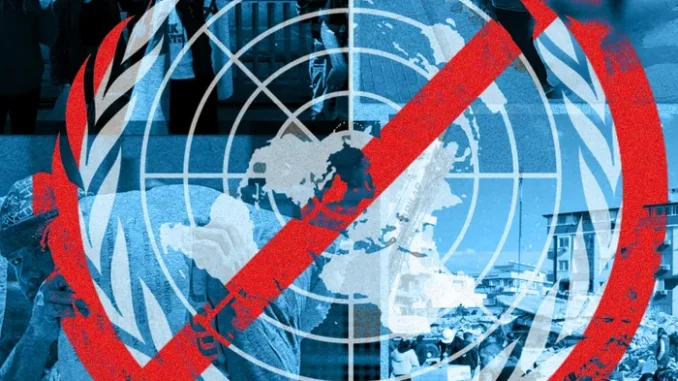
The Israeli government’s decision to ban the United Nations Relief and Works Agency for Palestine Refugees in the Near East (UNRWA) from operating in the country has stirred up strong responses from international observers and humanitarian groups. Experts are warning of a “massive ripple effect” this decision could have on Palestinian refugees in the region, with potentially far-reaching consequences for regional stability, humanitarian aid, and the future of Palestinian rights.
Background on UNRWA and Its Role in Palestinian Communities
UNRWA was established in 1949 to provide relief, education, healthcare, and other vital services to Palestinian refugees displaced by the 1948 Arab-Israeli conflict. The agency operates in five areas: Gaza, the West Bank, Lebanon, Syria, and Jordan, where it currently serves about 5.7 million Palestinian refugees. UNRWA’s presence has been crucial in supporting basic needs and providing access to education, healthcare, and economic opportunities in some of the most impoverished and unstable regions in the Middle East.
While UNRWA’s work has long been controversial in Israel due to accusations of anti-Israel bias and alleged ties to militant activities, the agency insists that its mission is strictly humanitarian. Israel’s ban could mean an end to services provided by UNRWA in certain areas, leading to a potentially severe impact on Palestinian refugee communities that rely on these resources.
What the Ban Entails
Though details are still emerging, Israel’s government has suggested that the UNRWA ban would restrict the agency from providing services within East Jerusalem and other areas under Israeli control. This ban could force thousands of Palestinian children to seek alternative education, healthcare, and social services, which are often limited or more difficult to access outside of UNRWA institutions.
Human rights advocates warn that the ban may extend to restrictions on UNRWA’s emergency assistance, health clinics, and infrastructure projects, creating an immediate vacuum in essential services for Palestinian communities.
Potential Humanitarian Impacts
- Education Disruptions: UNRWA operates schools in Palestinian communities, providing education to thousands of children. If these schools are closed, children will need to find alternative educational facilities, which may not be readily available. A disruption of this scale risks increasing dropout rates and limiting educational access, especially for girls and children in low-income families.
- Healthcare Access: UNRWA provides critical healthcare services, including maternal and child healthcare, mental health support, and primary care. In the absence of these facilities, thousands of Palestinians will likely face difficulties in accessing medical care, putting additional strain on already limited healthcare services in East Jerusalem and other affected areas.
- Economic Impact: Many Palestinian refugees employed by UNRWA could face job loss, exacerbating poverty and economic instability in communities that already struggle with limited job opportunities. This economic strain may fuel frustration and resentment, adding to regional tensions.
Wider Regional and Political Implications
- Increased Regional Tensions: Analysts believe that UNRWA’s withdrawal from certain areas could intensify existing tensions between Israel and the Palestinian territories. The removal of a key support network for Palestinian refugees could be seen as an affront to Palestinian rights, leading to heightened mistrust and animosity. There are concerns that the ban may contribute to unrest in the West Bank and Gaza, where conditions are already volatile.
- Pressure on Neighboring Countries: UNRWA’s services extend to Palestinian refugees in neighboring Jordan, Lebanon, and Syria, where conditions for refugees are often challenging. If UNRWA is unable to support Palestinians within Israel or the West Bank, it may place additional pressure on these neighboring countries to absorb refugees or to provide additional resources, creating a strain on their economies and services.
- Diplomatic Ramifications: This decision could impact Israel’s relationships with key international allies, especially those that support UNRWA, such as the European Union and several Arab countries. The United States, which has been a major UNRWA donor but has also been critical of some of its operations, may face pressure to mediate the situation to avoid further escalation.
- Impact on Peace Efforts: Humanitarian groups argue that undermining UNRWA’s work could harm ongoing peace efforts, as the agency has historically played a role in stabilizing vulnerable communities and providing a pathway to dialogue and understanding. With fewer services available to refugees, desperation may increase, driving more people toward militancy rather than peaceful solutions.
Concerns and Criticisms from the International Community
The UN, along with numerous humanitarian organizations, has voiced concern over Israel’s decision, stating that UNRWA provides critical support to Palestinian communities that would otherwise lack access to education and healthcare. Many argue that closing off UNRWA’s work in certain areas could worsen the already fragile situation for Palestinians, fueling unrest and increasing humanitarian needs.
UN Secretary-General António Guterres has called for dialogue, urging Israeli officials to reconsider the ban to prevent any escalation of the humanitarian crisis. The European Union has also expressed “deep regret” over the move, underscoring the role that UNRWA plays in maintaining regional stability and supporting millions of Palestinian refugees.
Looking Ahead: What Comes Next?
As Israel’s UNRWA ban is implemented, experts warn that Palestinian communities may face new hardships as essential services become harder to access. Without intervention from international bodies or a shift in policy, the ban may lead to increased displacement, instability, and tension.
While it remains to be seen how this ban will unfold, the international community will be closely monitoring its impacts on Palestinian refugees, as well as the broader implications for peace and stability in the region.