
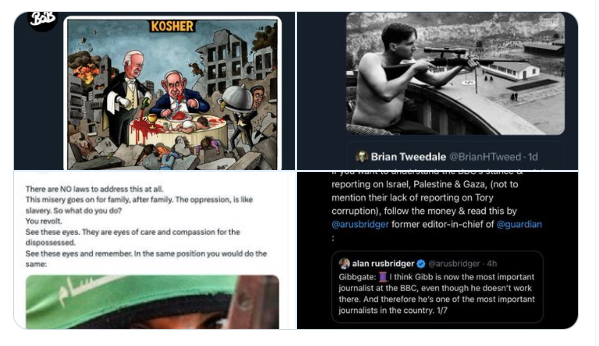
Outrage has erupted within media and political circles after a highly controversial filmmaker known for their anti-Israel stance was appointed as a patron of a leading international TV documentary organization. The decision has ignited fierce debate, with critics calling it an inappropriate endorsement of extreme political views, while supporters argue that it reflects the importance of artistic freedom and diverse perspectives.
The Controversial Appointment
The director in question, who has gained notoriety for their provocative films that heavily criticize Israel’s policies and military actions, was recently named a patron of a top TV documentary body, an organization that champions documentary filmmakers and the promotion of non-fiction storytelling on a global scale. The body is highly respected within the industry and provides significant influence over the direction of documentary filmmaking, funding, and distribution.
This appointment has sparked widespread anger, particularly among pro-Israel advocacy groups and political figures, who accuse the director of spreading inflammatory and biased portrayals of Israel in their work. They argue that such an individual’s patronage tarnishes the reputation of the documentary body and alienates a significant segment of the audience and industry professionals.
A History of Controversial Films
The director has built a career around politically charged documentaries that spotlight the Israeli-Palestinian conflict. Their films have often depicted Israel as an aggressor and occupier, which has led to accusations of promoting anti-Israel propaganda. While the director claims their work is based on truth-telling and shedding light on the plight of Palestinians, detractors argue that the filmmaker selectively ignores key facts and context, painting a skewed picture that fuels anti-Israel sentiment.
Some of the director’s films have been banned or condemned in certain countries due to their provocative content. However, they have also received accolades and critical acclaim from those who appreciate their unflinching approach to difficult political subjects.
Pro-Israel Groups Speak Out
The announcement has triggered a wave of condemnation from pro-Israel organizations, who view the decision as an affront to the values of fairness and neutrality in documentary filmmaking. These groups argue that the director’s track record shows a clear bias and that their new role as patron risks further normalizing one-sided and hostile portrayals of Israel.
One prominent pro-Israel lobby group issued a statement calling the appointment “a reckless and divisive move that elevates someone who has made a career out of vilifying Israel.” They added that this move could undermine the credibility of the documentary body, suggesting that it risks alienating Jewish and Israeli audiences, as well as anyone who supports a more balanced view of the Israel-Palestine conflict.
Support for Artistic Freedom
Despite the backlash, the director has garnered strong support from defenders of artistic freedom and free speech, who argue that filmmakers must be allowed to explore contentious political issues without fear of censorship or personal attacks. Many in the documentary community have praised the director for their boldness and willingness to tackle subjects that others shy away from.
Supporters of the appointment argue that documentary filmmaking is inherently subjective, and that it is vital to have diverse voices contributing to discussions about global issues. A spokesperson for the documentary body defended the appointment, stating, “We believe in fostering an environment where filmmakers of all viewpoints can thrive. Our new patron has made a significant contribution to the documentary world and brings a unique perspective that challenges the status quo.”
They further argued that this move is not about endorsing a specific political ideology, but about promoting the value of fearless storytelling in a world where media often shies away from controversy.
Political Repercussions
The controversy has spilled over into the political arena, with politicians from both sides weighing in. Several pro-Israel lawmakers have called for the organization to reconsider its decision, warning that this could lead to a broader cultural divide.
A member of parliament from a center-right party criticized the appointment during a recent debate, saying, “We cannot turn a blind eye when someone with a history of extreme and inflammatory views is given a platform to influence our media landscape.”
On the other side, more progressive politicians have defended the appointment as a victory for free expression, stating that it is the role of art to provoke thought and discussion, even on uncomfortable subjects. They argue that attempts to stifle voices, even controversial ones, set a dangerous precedent.
The Future of Documentary Filmmaking
As the debate rages on, the broader implications for the documentary industry are also being considered. Some filmmakers and critics worry that this situation could lead to increased politicization of the documentary world, where directors are judged more on their political views than on the quality and impact of their work.
Others see this as an opportunity for the documentary field to evolve, arguing that confronting challenging issues head-on is essential to the art form. They believe the outcry surrounding the appointment could open up discussions about the role of documentaries in shaping public opinion and the responsibilities of filmmakers in presenting nuanced, balanced perspectives.
Conclusion
The decision to make a controversial anti-Israel director a patron of a leading documentary organization has unleashed a storm of criticism and debate. While some see this as a misguided and politically charged move, others defend it as a necessary step in supporting free expression and the diversification of voices in the media. Regardless of the outcome, this controversy highlights the deep divisions surrounding the Israel-Palestine conflict and the role of media in representing political struggles. The documentary body now faces the challenge of navigating the backlash while maintaining its commitment to artistic freedom and non-fiction storytelling.